Smarty Pants: A Real-World Appliqué Review
First Impressions: Clever, Compact, and Instantly Recognizable
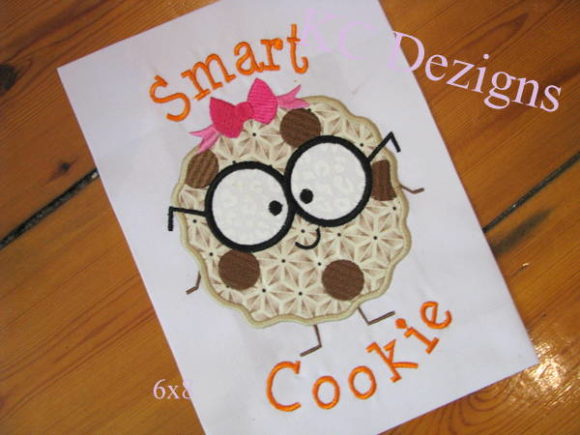
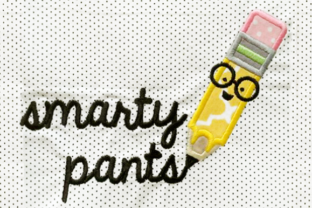
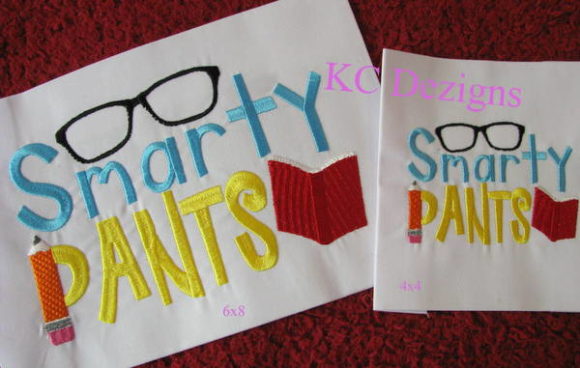
Opening the Smarty Pants embroidery file felt like unboxing a well-designed classroom prop—playful but purposeful. As a machine appliqué design, it leans into bold shape over fussy detail: clean outlines, generous satin-stitched edges, and a compact layout that reads clearly even at 3.5 inches tall. It’s not trying to be photorealistic; it’s aiming for charm, wit, and immediate recognition—the kind of visual shorthand that makes customers pause mid-scroll on Etsy or smile when they see it stitched on a child’s backpack. The “smarty” energy comes through in the tilted angle of the glasses and the confident curve of the mouth—not cartoonish, not stiff, just smartly styled.
Where Smarty Pants Actually Shines (and Where It Needs Care)
I tested Smarty Pants across three real projects: a cotton twill tote bag for a local tutoring co-op, a lightweight baby onesie for a nursery-themed gift set, and a woven patch intended for iron-on application to denim jackets. Each use case revealed something different—and useful.
On the tote bag? Brilliant. The appliqué held crisp definition with minimal puckering, especially when paired with medium-weight cutaway stabilizer and a 60/8 sharp needle. The design’s balanced negative space kept it from feeling heavy, and the satin stitch border gave it a polished, boutique-ready finish—ideal for small shop product photography or craft fair displays.
On the baby onesie? More nuanced. The thin knit fabric required a tear-away + light cutaway combo, and I slowed the machine speed by 20% to avoid skipped stitches around the curved temple area of the glasses. Still, the result was soft, wearable, and undeniably sweet—a personalized gift that felt handmade without looking amateurish.
The patch version? Surprisingly versatile. When stitched out on twill with a heat-seal backing, Smarty Pants became a reusable branding element—great for teachers’ lounge swag or back-to-school teacher appreciation kits. Its scale and clarity mean it photographs well in printable mockups, too, which matters if you’re listing it as a digital embroidery file on your Etsy shop.
Fabric & Fit: Know Before You Stitch
Smarty Pants is forgiving—but not universal. It works cleanly on stable, medium-weight fabrics like cotton duck, canvas, terry cloth towels, and structured aprons. Avoid using it full-size on highly stretchy knits (think jersey tees) without significant stabilization and possibly digitized adjustments to reduce pull. On dark fabric, test thread color contrast first: light gray or cream fill threads pop nicely against navy or charcoal, but pale yellow can disappear on khaki.
Curved surfaces—like caps or rounded pillow covers—require careful hooping and possibly repositioning the design to keep the glasses level. Tiny corners (like the bridge of those specs) are where stitch density matters most; if your machine defaults to high-density fills, consider reducing density slightly to prevent stiffness or thread breakage on smaller hoop sizes.
What This Design Says About Your Brand—Without Saying a Word
When customers see Smarty Pants on a finished product, they’re not just seeing an embroidery design—they’re reading tone, intention, and care. It signals warmth and intelligence, not generic school spirit. That makes it strong for boutique branding: think handmade tea towels for a literacy nonprofit, embroidered kitchen aprons for a children’s cooking class, or custom sweatshirt sets for a homeschool co-op. It elevates a simple tote bag from “functional” to “thoughtfully made.”
For Etsy sellers and craft business owners, that perception shift directly affects buyer engagement and perceived value. A well-executed Smarty Pants appliqué on a linen pillow cover reads more premium than a stock font-based “A+” motif. It feels intentional—not templated. And because it’s machine appliqué (not just satin-stitched lettering), it invites texture variation: try wool blend felt for the base shape, then contrasting thread for the glasses frame to add subtle depth.
Practical Designer Notes You’ll Actually Use
- Always test on scrap fabric first—especially if stitching on textured weaves like herringbone or looped terry.
- Check thread color contrast in both natural and artificial light; what looks vibrant on screen may mute on fabric.
- Review stitch density before final run—appliqué designs with tight satin borders can benefit from a slight density reduction on delicate fabrics.
- Confirm hoop size compatibility—if your smallest hoop is 4x4, verify Smarty Pants fits comfortably within that boundary, including seam allowance for trimming.
- Inspect small details at 200% zoom in your embroidery software: look for overlapping stitches near the lens edges or potential nesting issues in layered appliqué steps.
- Test black-and-white mockups—this design relies on shape and proportion, so grayscale previews reveal clarity issues faster than color.
- Use proper stabilizer: medium cutaway for apparel, tear-away for towels or patches, and fusible + tear-away for lightweight knits.
- Verify licensing before selling finished items or bundling Smarty Pants into design assets—commercial use rights aren’t implied unless explicitly stated.
Final Thought: Not Just Back-To-School—It’s Back-To-Meaning
Smarty Pants isn’t just another back-to-school embroidery file. It’s a design that earns its place on real products—because it balances personality with practicality. It doesn’t shout. It winks. It fits neatly on a baby cap, holds up on a frequently washed kitchen towel, and adds quiet confidence to a small shop’s holiday embroidery collection. For designers, crafters, and creative entrepreneurs who care how their work lands—not just how it stitches—Smarty Pants is the kind of machine appliqué design that reminds you why you love this craft: it’s clever, it’s kind, and it’s built to be seen, used, and loved.