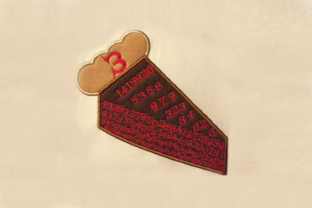
Pi Pie Applique: A Clever, Sellable Embroidery Design
As an embroidery designer who’s prepped over 200 craft fair booths—from bustling downtown markets to quiet boutique pop-ups—I approach every new machine embroidery design like a product strategist first and a stitcher second. So when I opened Pi Pie Applique, my first thought wasn’t “Ooh, cute!”—it was “Who buys this, where, and how fast does it move off the table?” Let’s break it down honestly.
First Impression: Playful, Precise, and Perfectly Niche
Pi Pie Applique lands with warm, approachable wit—not overly academic, not childish, but smart-casual. That slice-of-pie silhouette paired with visible pi digits (3.14159…) gives it instant recognition for math lovers, teachers, students, and science-minded shoppers. It reads as friendly cleverness, not textbook rigor. In a booth full of florals and quotes, it stands out without shouting. It’s not farmhouse, not minimalist—it’s curious charm: the kind that makes someone pause, smile, and say, “Wait—pi *and* pie? Yes.”
Where It Shines on Craft Fair Products
This design thrives where personality meets practicality:
- Tote bags: Centered on the front panel (medium hoop size), it reads clearly from 6 feet away—ideal for Back To School shoppers grabbing teacher gifts or student supplies.
- Aprons: Positioned just above the pocket, it adds levity to kitchen-ready handmade products—especially appealing at food-focused fairs or STEM-themed school events.
- Tea towel embroidery: Works beautifully in the top corner or centered on the hem. The pie shape anchors the composition; the digits invite closer inspection—a great conversation starter while customers browse.
- Embroidered patches: With its clean outline and contained detail, Pi Pie Applique transfers well to iron-on or sew-on patches. Perfect for badge reels, backpacks, or denim jackets—high visibility, low risk of snagging.
- Small pouches & pillow covers: At smaller hoop sizes, it retains legibility better than most numeric designs—thanks to the strong pie silhouette acting as a visual frame for the digits.
It’s less effective on curved surfaces like caps unless using the smallest hoop size and testing stabilizer layers thoroughly. And while it’s charming on market bags, avoid placing it near seams or gussets where distortion could blur the pi digits.
Real-World Selling Strengths
What makes Pi Pie Applique a craft fair winner isn’t just charm—it’s clarity. At a glance, shoppers get it. No decoding needed. That’s rare among themed embroidery files. It also scales cleanly: the pie shape holds up large, the digits stay readable small (within reason). For Etsy sellers, that means one digital embroidery file supports multiple product mockups—tote, apron, patch—without needing redesigns.
Photography is forgiving too. The contrast between pie crust and filling creates natural depth, helping the design pop in natural light—critical for booth signage and Instagram listings. And because it’s inherently giftable (think: Pi Day + teacher appreciation + Back To School bundles), it lifts perceived value on handmade products without requiring premium materials.
Careful-Use Notes Every Designer Should Check
Before cutting fabric or loading hoops, test these:
- Dense stitch areas: The crimped edge of the pie crust and tight curves around the digits may pile up thread. Confirm stitch density isn’t overwhelming for lightweight cotton or linen.
- Tiny details: Pi digits below 0.25” tall risk blurring—especially on textured tea towels or terry cloth. Stick to medium or large hoop sizes for those surfaces.
- Dark fabric: Light-colored thread on navy or charcoal works—but verify contrast on your actual fabric, not just screen previews. Consider outlining digits with a darker thread if needed.
- Curved cap surfaces: Use tear-away + cut-away stabilizer combo, and slow down your machine speed. Test on scrap first—digit clarity suffers fastest here.
- Thread colors: The description doesn’t specify thread palette, so choose intentionally: warm browns + cream for bakery charm, navy + white for academic polish, or bright coral + gray for modern STEM energy.
Design Practicality for Batch Production
With 8 formats across 4 hoop sizes and steps separated by color, Pi Pie Applique is built for efficiency. You can batch-embroider 20 tote bags in one go, then switch to patches without re-hooping—saving time and reducing errors. The separation by color also helps with thread management and troubleshooting. Just confirm your embroidery software recognizes all formats before importing.
That said—don’t assume “8 formats” means universal compatibility. Always open each file in your machine’s native software and verify jump stitches, trim commands, and stop points. One misaligned digit sequence can cost you three minutes per piece at scale.
Final Designer Checklist Before Booth Day
- Test the design on scrap fabric matching your final product (e.g., canvas tote, flour-sack towel, twill cap).
- Check thread contrast under both indoor and outdoor lighting—the booth tent changes everything.
- Review spacing between digits: are they evenly kerned? Does “3.14” feel balanced next to “159…”?
- Confirm hoop size matches your intended product placement—and that your machine handles the largest format smoothly.
- Inspect stitch density visually: no muddy fills, no skipped satin edges on the crust.
- Use the right stabilizer for your fabric texture—especially critical for textured towels or stretchy knits.
- Create at least one real mockup (not just a printable mockup) to assess drape, weight, and hand-feel.
- Compare at least two fabric colorways side-by-side—cream vs. oatmeal, navy vs. black—to see which best supports the design’s warmth.
- Verify commercial licensing terms before selling finished products. If unclear, contact the designer—never assume.
Bottom line: Pi Pie Applique isn’t just another novelty file. It’s a thoughtful, commercially aware embroidery design—designed for real people buying real handmade products at real craft fairs. It balances wit and wearability, clarity and charm, simplicity and substance. For embroidery business owners building a cohesive, sellable catalog—or Etsy sellers curating STEM-adjacent design assets—it’s a quietly powerful addition. Just remember: even the cleverest pie needs the right crust, the right oven, and the right timing. Test, refine, and serve fresh.